 EN
EN
 AR
AR
 BG
BG
 HR
HR
 CS
CS
 DA
DA
 NL
NL
 FI
FI
 FR
FR
 DE
DE
 EL
EL
 HI
HI
 IT
IT
 JA
JA
 KO
KO
 PL
PL
 PT
PT
 RU
RU
 ES
ES
 SV
SV
 TL
TL
 IW
IW
 ID
ID
 LV
LV
 SR
SR
 UK
UK
 VI
VI
 GL
GL
 HU
HU
 TH
TH
 TR
TR
 AF
AF
 MS
MS
 SW
SW
 GA
GA
 CY
CY
 IS
IS
 BN
BN
 BS
BS
 NE
NE

Which specifications matter most when selecting pogo pin connectors?
Selecting the right pogo pin connector for your application requires careful consideration of multiple technical specifications that directly impact performance, reliability, and longevity. Engineers and designers across industries rely on these spring-loaded connectors to establish temporary electrical connections in testing equipment, charging stations, and various electronic devices. Understanding which specifications matter most can make the difference between a successful project and costly design revisions.
Current Carrying Capacity and Electrical Performance
Maximum Current Rating
The current carrying capacity represents one of the most critical specifications when selecting a pogo pin connector. This rating determines how much electrical current the connector can safely handle without overheating or degrading. Most standard pogo pin connectors range from 0.5 amperes to 5 amperes, though specialized high-current versions can handle up to 30 amperes or more. Engineers must carefully match the current rating to their application requirements, considering both continuous and peak current demands.
Temperature rise becomes a significant concern when current flows through a pogo pin connector. The resistance of the connection point generates heat, which can affect both the connector's performance and the surrounding components. Quality connectors maintain low resistance even after thousands of mating cycles, ensuring consistent current flow and minimal power loss. This characteristic proves especially important in battery charging applications where efficiency directly impacts charging time and energy consumption.
Voltage Ratings and Insulation
Voltage ratings for pogo pin connectors typically range from low-voltage applications at 12V DC to high-voltage systems exceeding 1000V DC. The insulation properties of the connector housing and internal components must withstand the specified voltage without breakdown or arcing. Additionally, the spacing between adjacent pins becomes crucial in multi-pin configurations to prevent crosstalk and maintain signal integrity.
Dielectric strength testing ensures that the pogo pin connector can maintain its insulating properties under stress conditions. This specification becomes particularly important in harsh environments where moisture, dust, or chemical exposure might compromise the insulation. Engineers should consider both the operating voltage and potential transient voltage spikes when selecting appropriate voltage ratings.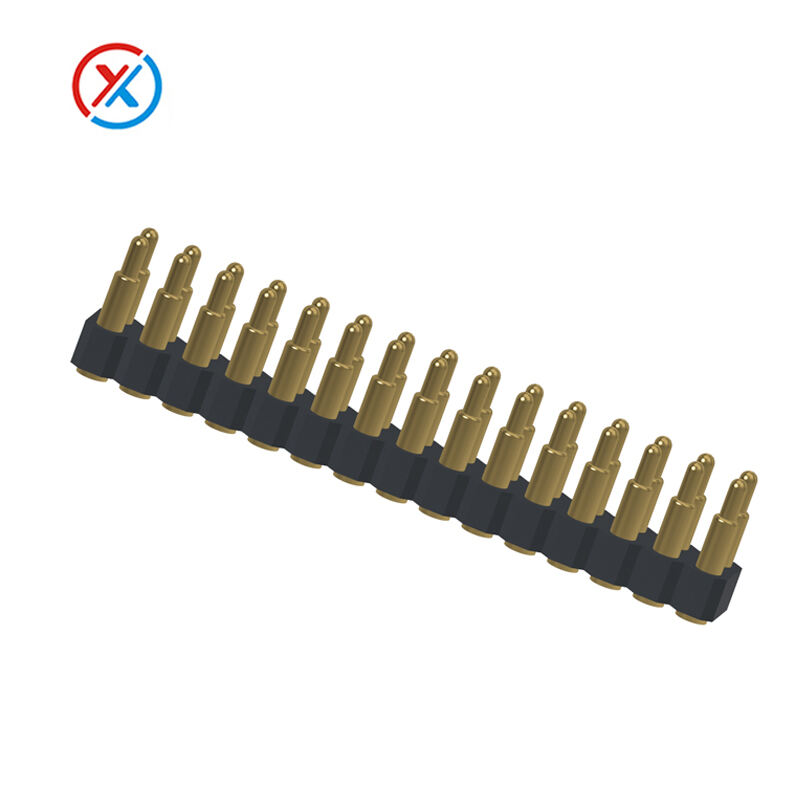
Mechanical Specifications and Durability
Spring Force and Compression Travel
The spring force of a pogo pin connector determines the contact pressure between the pin and the target pad, directly affecting connection reliability. Typical spring forces range from 50 grams to 500 grams per pin, with most applications requiring between 100-200 grams. Higher spring forces generally provide better contact reliability but require more actuation force and may cause wear on delicate target surfaces.
Compression travel refers to the distance the pogo pin can be compressed while maintaining proper spring tension. This specification typically ranges from 1mm to 5mm, allowing for variations in PCB thickness, component tolerances, and assembly stack-up. Adequate compression travel ensures consistent contact even when manufacturing tolerances cause slight misalignments or height variations.
Cycle Life and Mechanical Endurance
Cycle life represents the number of mating and unmating operations a pogo pin connector can withstand before performance degradation occurs. Standard connectors typically offer 10,000 to 100,000 cycles, while premium versions can exceed 1,000,000 cycles. This specification proves critical in automated test equipment and production fixtures where connectors may experience thousands of cycles per day.
Mechanical endurance testing subjects pogo pin connectors to repeated compression cycles while monitoring electrical resistance, spring force retention, and physical wear. High-quality connectors maintain consistent performance throughout their rated cycle life, with minimal increases in contact resistance or decreases in spring force. This reliability ensures predictable performance and reduces maintenance requirements in critical applications.
Contact Materials and Plating Options
Base Contact Materials
The choice of contact material significantly impacts the electrical and mechanical performance of a pogo pin connector. Beryllium copper serves as the most common base material due to its excellent spring properties, electrical conductivity, and corrosion resistance. This material maintains consistent spring force over millions of cycles while providing low electrical resistance and good thermal conductivity.
Alternative base materials include phosphor bronze and stainless steel, each offering specific advantages for particular applications. Phosphor bronze provides good electrical conductivity and corrosion resistance at a lower cost than beryllium copper, making it suitable for less demanding applications. Stainless steel offers superior corrosion resistance and magnetic properties but typically provides higher electrical resistance.
Surface Plating and Finishes
Surface plating protects the base material from corrosion while optimizing electrical contact properties. Gold plating remains the premium choice for pogo pin connectors due to its excellent corrosion resistance, low contact resistance, and stable electrical properties. The thickness of gold plating typically ranges from 0.5 to 2.5 microns, with thicker coatings providing better durability and corrosion protection.
Alternative plating options include nickel, silver, and palladium-based finishes, each offering specific benefits for different applications. Nickel plating provides good corrosion resistance and wear properties at a lower cost than gold, making it suitable for high-cycle applications where cost sensitivity exists. Silver plating offers excellent electrical conductivity but requires careful environmental considerations due to tarnishing concerns.
Physical Dimensions and Mounting Considerations
Pin Diameter and Pitch Spacing
Pin diameter affects both the current carrying capacity and the mechanical stability of a pogo pin connector. Common diameters range from 0.5mm for fine-pitch applications to 3.0mm for high-current connections. Smaller diameters allow for higher pin density but may limit current capacity and mechanical durability, while larger diameters provide better current handling and mechanical strength but require more space.
Pitch spacing between pins determines the overall connector density and influences the minimum PCB pad spacing requirements. Standard pitch spacings include 1.27mm, 2.0mm, and 2.54mm, with custom spacing available for specific applications. Tighter pitch spacing allows for more connections in a given area but may increase manufacturing complexity and reduce current capacity per pin due to thermal considerations.
Overall Length and Profile Height
The overall length of a pogo pin connector includes both the compressed and extended positions, affecting the total stack-up height in the application. Standard lengths range from 10mm to 50mm, with custom lengths available for specific requirements. Engineers must consider both the minimum compressed length and the maximum extended length when designing the mechanical interface.
Profile height becomes critical in space-constrained applications where the pogo pin connector must fit within tight mechanical envelopes. Low-profile designs minimize the overall system height but may compromise spring travel or current capacity. Balancing profile height with performance requirements requires careful consideration of the specific application constraints and performance needs.
Environmental and Operating Conditions
Temperature Range and Thermal Performance
Operating temperature range significantly impacts the performance and reliability of pogo pin connectors. Standard connectors typically operate from -40°C to +125°C, while specialized high-temperature versions can function up to +200°C or higher. Temperature cycling affects the spring properties, electrical resistance, and mechanical dimensions of the connector components.
Thermal expansion coefficients of different materials within the pogo pin connector must be considered to prevent mechanical stress and maintain electrical contact integrity across the operating temperature range. Quality connectors use materials with compatible expansion rates and design features that accommodate thermal growth without compromising performance.
Environmental Sealing and Contamination Resistance
Environmental sealing capabilities determine the suitability of a pogo pin connector for harsh operating conditions. IP ratings indicate the level of protection against dust and moisture ingress, with common ratings including IP54, IP65, and IP67. Higher IP ratings require more sophisticated sealing designs but provide better protection in challenging environments.
Contamination resistance becomes particularly important in industrial applications where dust, chemicals, or other contaminants may accumulate on the connector surfaces. Self-cleaning contact surfaces and protective coatings help maintain reliable electrical connections even in contaminated environments. Some pogo pin connectors incorporate wiping actions that help remove surface contamination during mating cycles.
Electrical Signal Integrity and High-Frequency Performance
Contact Resistance and Stability
Contact resistance represents a critical specification for pogo pin connectors, particularly in precision measurement and high-current applications. Initial contact resistance typically ranges from 10 milliohms to 100 milliohms, depending on the contact materials, plating, and mechanical design. Consistent contact resistance throughout the connector's operational life ensures reliable performance and accurate signal transmission.
Contact resistance stability refers to the variation in resistance over multiple mating cycles, temperature changes, and time. High-quality pogo pin connectors maintain stable contact resistance even after hundreds of thousands of cycles, preventing signal degradation and measurement errors. This stability proves especially important in automated test equipment where consistent measurements are critical for accurate results.
High-Frequency Characteristics and Signal Quality
High-frequency applications require careful consideration of the pogo pin connector's impedance characteristics, crosstalk performance, and signal integrity properties. The mechanical design of the connector affects its impedance matching capabilities, with controlled impedance versions available for critical RF and digital signal applications.
Signal quality parameters include insertion loss, return loss, and crosstalk between adjacent pins in multi-pin configurations. Premium pogo pin connectors designed for high-frequency applications incorporate shielding, ground planes, and optimized pin geometries to minimize signal degradation and electromagnetic interference. These features become increasingly important as signal frequencies exceed 1 GHz.
FAQ
What is the typical lifespan of a pogo pin connector in terms of mating cycles?
The lifespan of a pogo pin connector varies significantly based on quality, materials, and application conditions. Standard connectors typically offer 10,000 to 100,000 mating cycles, while premium versions can exceed 1,000,000 cycles. Factors such as contact force, environmental conditions, and maintenance practices directly influence the actual cycle life achieved in real-world applications.
How do I determine the appropriate spring force for my pogo pin connector application?
Spring force selection depends on several factors including the required contact reliability, target surface hardness, and available actuation force. Generally, 100-200 grams per pin provides good contact reliability for most applications. Higher forces improve connection stability but require more actuation effort and may damage delicate target surfaces. Consider the total force for multi-pin connectors and ensure your actuation mechanism can provide adequate force.
Can pogo pin connectors handle both power and signal connections simultaneously?
Yes, pogo pin connectors can handle both power and signal connections in the same connector assembly, but proper design considerations are essential. Power pins should be sized appropriately for current requirements and positioned to minimize thermal effects on signal pins. Signal integrity may require shielding or increased spacing between power and signal pins to prevent interference. Custom connector designs often optimize pin arrangements for mixed-signal applications.
What environmental factors most significantly impact pogo pin connector performance?
Temperature extremes, humidity, vibration, and contamination represent the most significant environmental challenges for pogo pin connectors. Temperature cycling affects spring properties and contact resistance, while humidity can promote corrosion of contact surfaces. Vibration may cause intermittent connections, and contamination can increase contact resistance or cause complete connection failure. Proper material selection, sealing, and protective coatings help mitigate these environmental effects.
Hot News
-
Challenges for Pogo pin manufacturers in the AI era
2023-12-14
-
Teach you how to understand Pogo pin spline structure
2023-12-14
-
What products can Pogo pin be used in?
2023-12-14
-
How to choose Pogo pin connector
2023-12-14